Recycling and Sustainability — Garden Maintenance Millbank
 Garden Maintenance Millbank places sustainability at the heart of every project. Our approach to an eco-friendly waste disposal area and a sustainable rubbish gardening area is practical, measurable and community-focused. We design garden upkeep and maintenance workflows that minimise landfill waste, prioritise reuse, and divert organic material into productive cycles. From pruning to soil management, every step is an opportunity to reduce carbon and recover value from green waste while supporting local environmental goals.
Our Millbank garden maintenance teams are trained to separate materials at source, in line with the boroughs' approach to waste separation that encourages distinct streams for food waste, garden organics and dry recycling. We incorporate easy-to-follow on-site segregation zones so operatives and clients can see a clear chain from collection to recycling. This ensures that both our commercial and domestic work contributes to a wider network of sustainable disposal and reuse in the area.

Targets and measurable commitments
We have set a clear recycling percentage target to drive continuous improvement: our operational target is to achieve a 70% recycling and reuse rate by 2030, with an interim goal of 65% by 2027. These figures apply to green waste, timber, soil, and inert materials generated by garden maintenance in Millbank. We report progress through internal audits and collaborate with local borough programmes so our performance aligns with municipal recycling ambitions.Low-carbon fleet and sustainable logistics
To support an eco-friendly waste disposal area, our fleet is transitioning to low-carbon vans and alternative mobility solutions. We operate a mix of electric vans, plug-in hybrids and cargo bikes for short, dense Millbank routes. Reducing transport emissions reduces the total carbon footprint of waste movements and enables quicker, quieter service in the borough. Low-emission vehicles also allow us to transport sorted materials directly to local transfer stations and community reuse partners. What our low-carbon strategy includes:
- Phased replacement of diesel vans with electric vehicles and hybrids
- Route optimisation to lower mileage and emissions
- Use of cargo bikes for inner-city small-load collections
- Staff training on eco-driving and load consolidation
Our Millbank garden care services pair these logistics improvements with on-site interventions that reduce frequency of bulky waste removals. By composting and chipping green waste for reuse as mulch, we cut loads to transfer stations and encourage circular, low-impact horticulture.
We maintain active partnerships with local charities and community groups to amplify the benefits of a sustainable rubbish gardening area. Through agreements with community allotments, food redistribution schemes and habitat restoration projects we redirect viable plant material, potted plants, and soil improvements to groups that need them. These partnerships reduce landfill contributions and support social value by providing resources to local projects and vulnerable community members.
 Local transfer stations and the borough network: our collections feed into a network of transfer and treatment facilities operated by the borough and contracted waste managers. We regularly use local transfer stations in the Westminster area and coordinate with adjacent borough facilities to ensure green waste reaches composting sites, timber goes to recycling processors and inert material is handled appropriately. This collaboration respects borough waste separation rules and makes the most of municipal infrastructure.
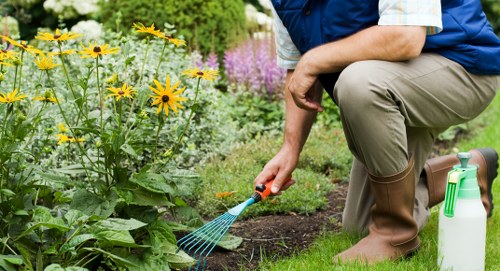 Sustainable rubbish gardening area practices include on-site composting bays, chipping machines for woody waste, soil remediation and re-use of organic outputs as mulch and soil conditioners. Our crews separate recyclable plastics, metal plant supports and glass from organic streams so non-organic recyclables can be passed to the right material recovery facilities. We also salvage useful stone, brick and paving for reuse in hard landscaping to cut demand for virgin materials.
Monitoring and continuous improvement are integral to our Millbank garden maintenance programmes. We collect data on volumes of green waste diverted, tonnes of wood chipped for reuse, and the percentage of materials passed to charitable partners. These metrics inform a rolling sustainability plan and help us adapt operations to changing borough policies. Transparency and measurable outcomes keep our efforts aligned with both client expectations and local environmental targets.
How residents and clients benefit: greener gardens, reduced waste charges and a visible contribution to a circular local economy. Our approach to an eco-friendly waste disposal area reduces landfill dependency and produces on-site benefits like improved soil structure and moisture retention from reused mulch. For property managers and homeowners seeking sustainable garden maintenance in Millbank, our methods deliver real environmental value and cost-efficient outcomes.
Commitment summary: we blend operational targets, low-carbon vans, links to transfer stations, and charity partnerships to build a resilient, sustainable service. By embedding reuse, composting and careful separation into every job we aim to set a new standard for Millbank garden maintenance that others can replicate — an approach that respects both the local urban fabric and the wider climate imperative.